Blog
News and technical articles.
Physiological intelligence, critical operations and what we are building at Dersalis.
Featured · Technical articles
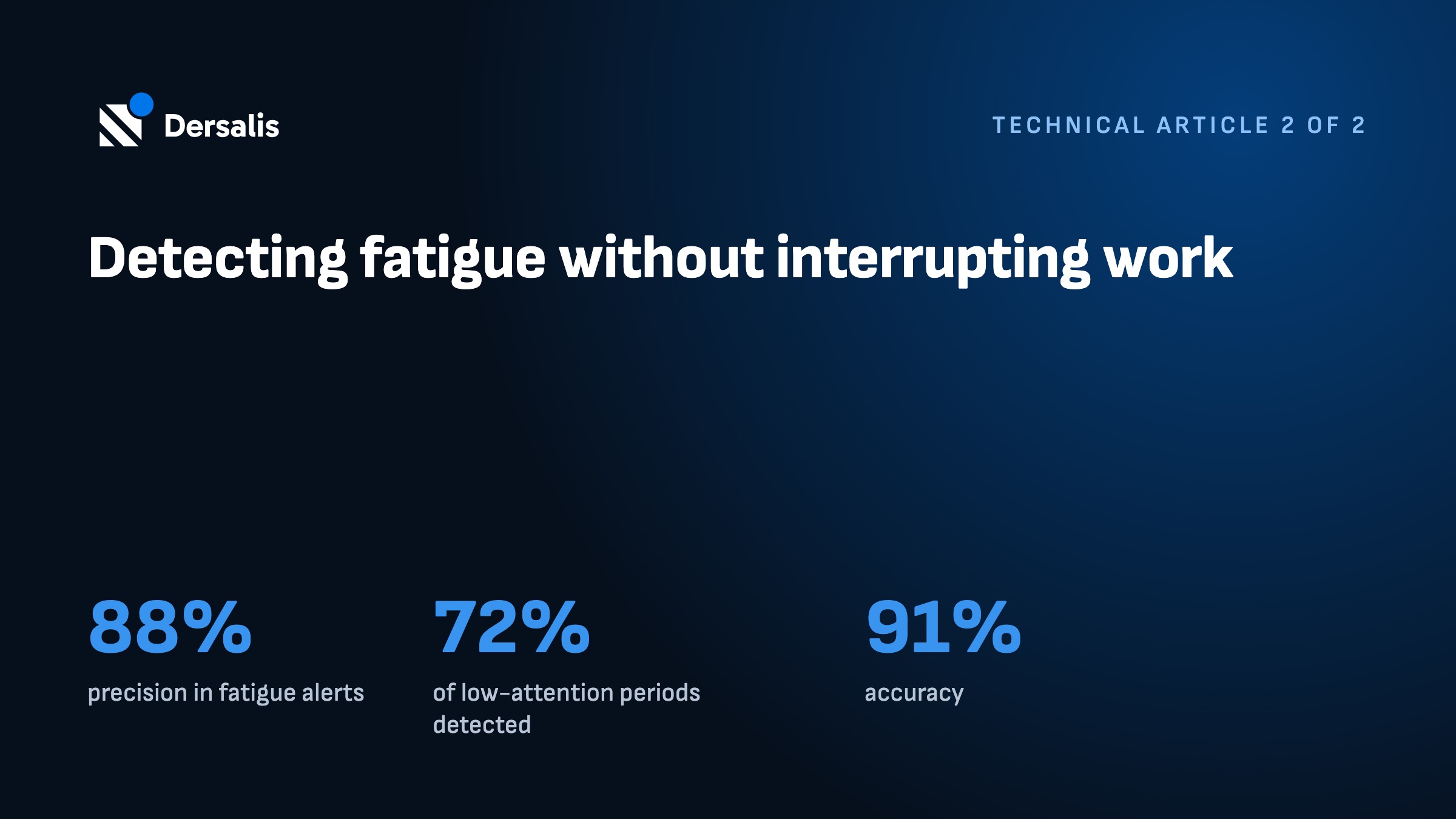
Detecting fatigue without interrupting work: the role of parasympathetic activity
A model based on heart rate variability, validated over five industrial logistics shifts at Ocyan in Macaé, was right in 88% of its fatigue alerts without requiring any answer from the worker.
News · October 29, 2026
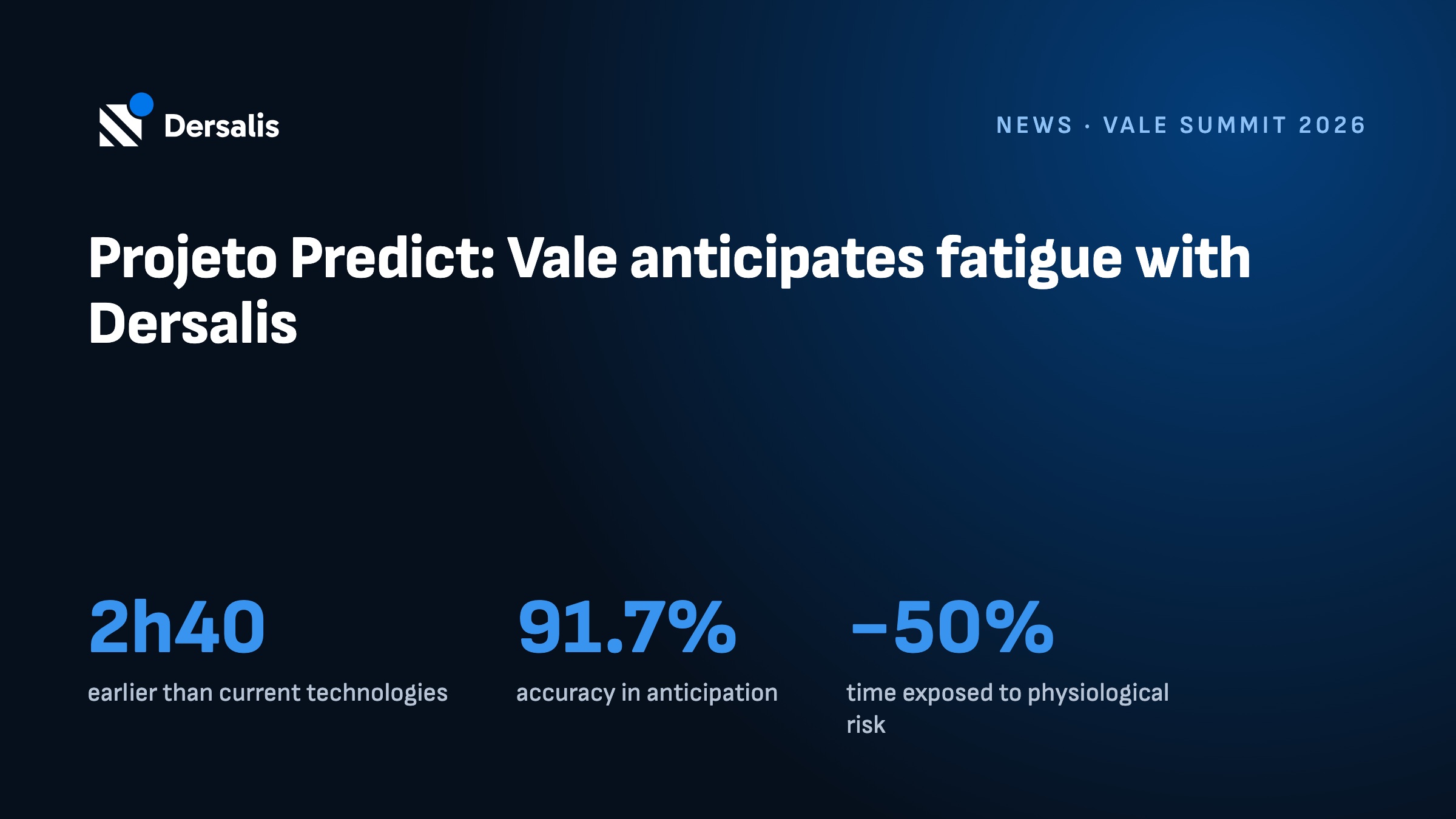
Projeto Predict: Vale presents fatigue prevention results with Dersalis at Vale Summit 2026
At Vale Summit 2026, Raquel Amorim and Yuzo Igarashi showed how Projeto Predict anticipated fatigue by up to 2h40 and halved the time exposed to risk at the Port of Tubarão and Serra Leste.
Technical articles · October 29, 2026
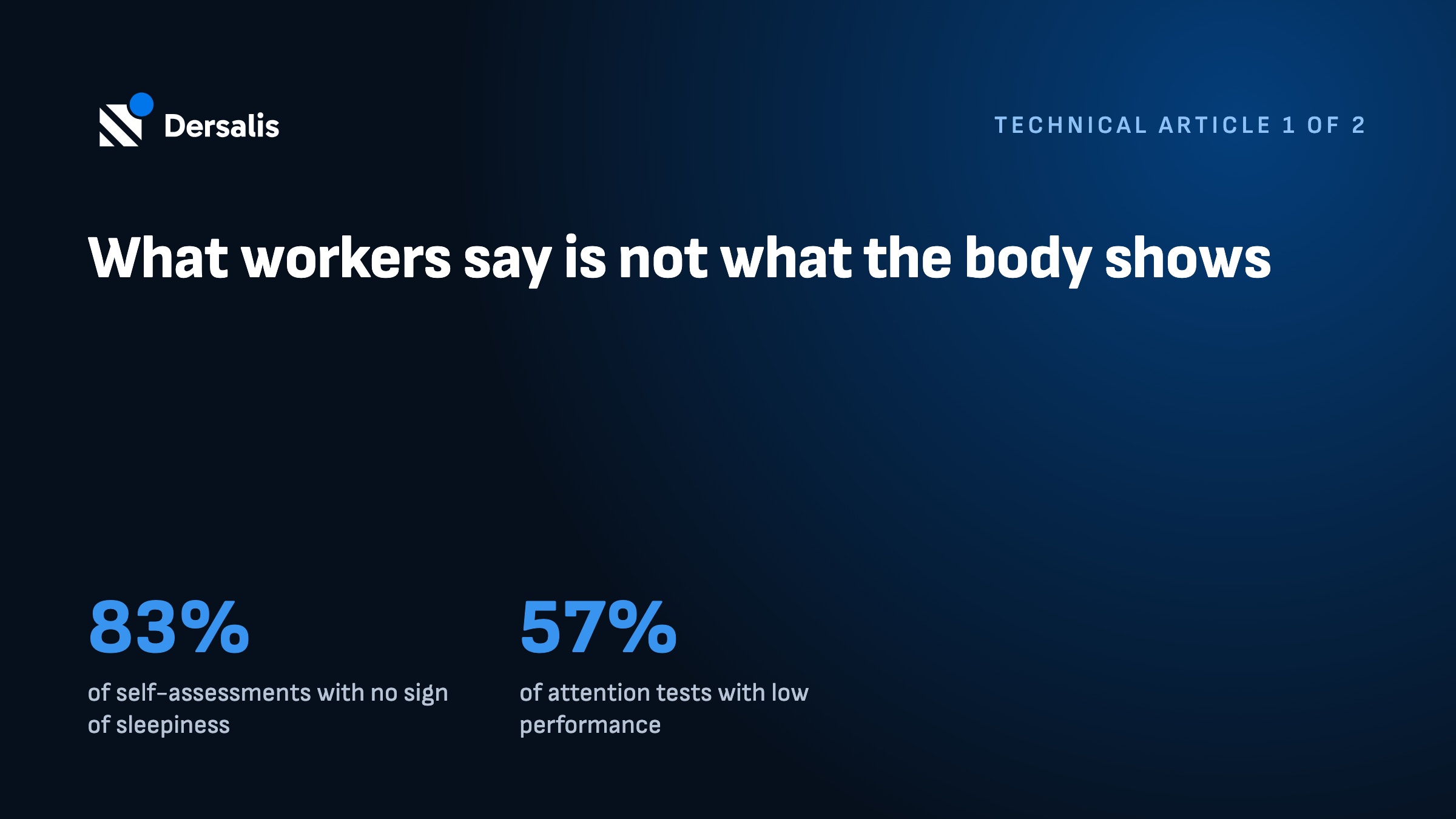
What workers say is not what the body shows: the bias of self-reported sleepiness in operations
Over three months on the ODN-1 drilling rig, 83% of self-assessments showed little or no sleepiness, yet 57% of attention tests showed low performance. What that gap teaches us about fatigue management.

Insights · June 05, 2025
Heat stress: the silent enemy of productivity in industry
Heat and humidity raise the risk of syncope and collapse in mines and industrial plants. See how physiological data help prevent heat stress.

Insights · June 05, 2025
How internal imbalance affects work performance
Circadian rhythm, sleep and long shifts affect performance and accident risk. Learn how to map physiological imbalance at work.

Insights · June 04, 2025
Adaptability and resilience in the workplace
Homeostasis, sleep and resilience: how workers’ adaptability affects occupational safety and how to track it with data.

Insights · June 04, 2025
Fatigue on the night shift: what health data reveal
A case study of a 12-hour night shift: how heart rate variability reveals the windows of highest fatigue risk.

Insights · April 03, 2025
Proactive occupational health, minute by minute, in the field
How occupational health teams can follow workers’ conditions minute by minute with wearable sensors and prevent incidents.